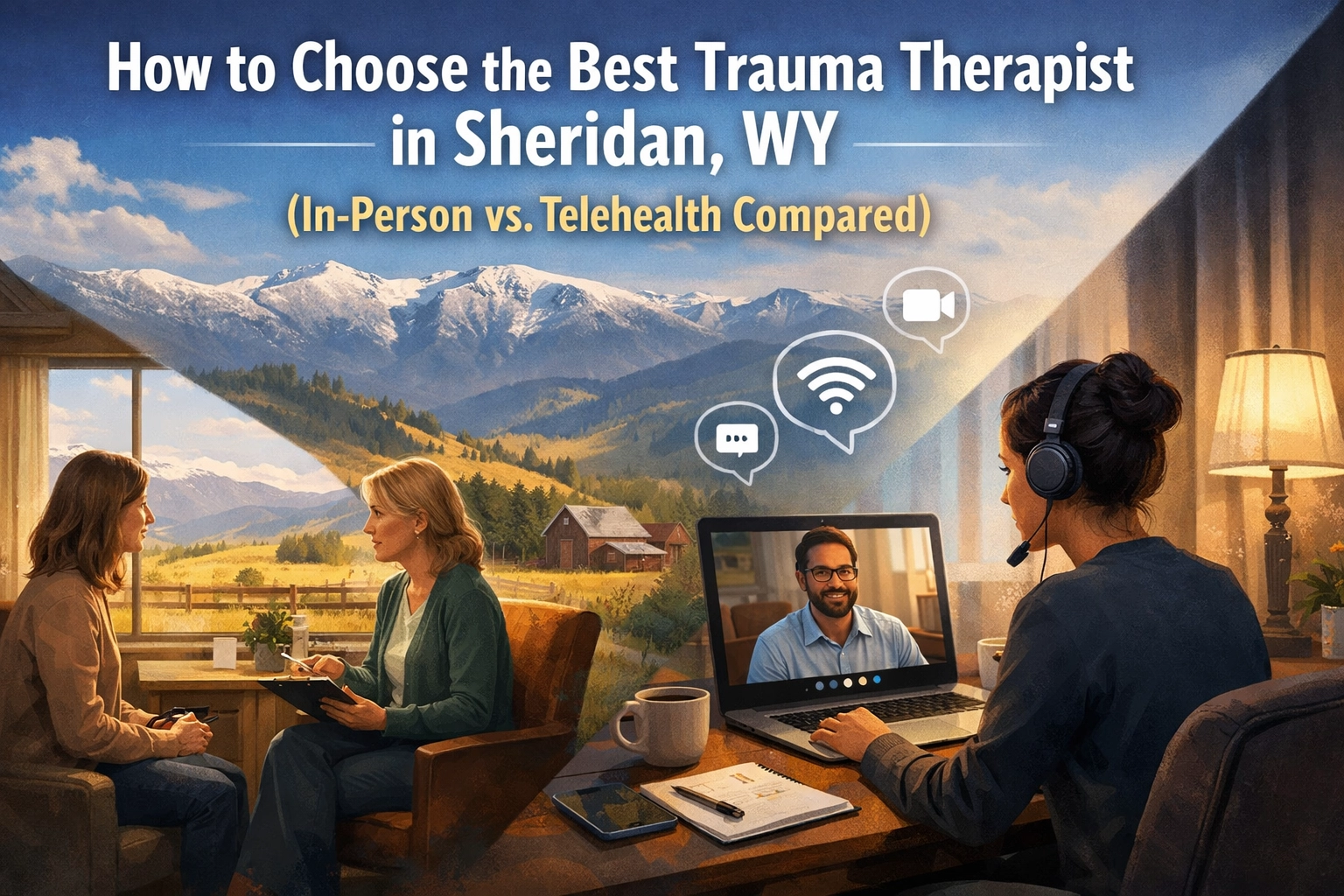
Finding the right trauma therapist in Sheridan, Wyoming is one of the most important decisions you’ll make on your healing journey. In Sheridan, WY, you now have more options than ever before — including both in-person trauma therapy and telehealth counseling.
Whether you’re navigating childhood trauma, recovering from a recent difficult experience, or working through patterns that have followed you for years, the right therapeutic relationship can make a profound difference.
What Makes a “Good Fit” in Trauma Therapy?
Not all therapy is the same. Trauma work requires specialized expertise and a therapeutic relationship built on safety and trust. A good therapist-client match goes beyond credentials on a wall — it involves feeling understood, supported, and safe enough to move through difficult material at your own pace.
Safety comes first. Trauma therapy begins with nervous system stabilization. A trauma-informed therapist prioritizes emotional safety and will never pressure you to move faster than your system is ready.
Specialized training matters. Effective trauma therapy often includes approaches such as EMDR, Trauma-Focused CBT, somatic therapies, or other trauma-informed methods that address both the mind and the body.
Personal connection counts. Even the most qualified therapist will not be effective if the relationship doesn’t feel right. During your first consultation, notice whether you feel heard, respected, and comfortable.

In-Person Trauma Therapy in Sheridan, WY
Traditional face-to-face therapy remains a powerful option for many people seeking trauma counseling in Sheridan. Sitting in the same room with a therapist can create a sense of grounding and presence that supports deep therapeutic work.
Human connection. Eye contact, body language, and subtle interpersonal cues can strengthen the therapeutic relationship and help trauma survivors feel more supported.
A dedicated healing space. Traveling to a therapy office can create a psychological boundary between everyday life and emotional processing.
Somatic and body-based work. Certain trauma therapies benefit from in-person observation of physical responses and nervous system regulation.
Local cultural understanding. Working with a therapist who understands Sheridan, rural life, and Wyoming culture can provide important context in therapy.
Considerations for In-Person Therapy
- Driving time and scheduling logistics
- Weather disruptions during Wyoming winters
- Limited scheduling flexibility compared to telehealth
- Privacy concerns in a smaller community

Telehealth Trauma Therapy: A Modern Option
Virtual therapy has expanded access to specialized mental health care. For many people seeking trauma therapy in Sheridan, telehealth offers flexibility that supports consistency and long-term progress.
Convenience. Sessions can take place from home, during a work break, or while traveling — reducing missed appointments.
Comfort and control. Some clients feel safer processing difficult emotions in their own environment.
Access to specialized therapists. Telehealth makes it easier to work with clinicians who have specific trauma expertise.
Immediate self-care. After an intense session, you are already in your home environment where you can rest or regulate.
Potential Challenges with Telehealth
- Reliable internet connection required
- Finding a private space for sessions
- Less access to full body language cues
- Creating emotional boundaries between therapy and daily life

The Dynamic Reflections Approach
At Dynamic Reflections, we believe trauma therapy should adapt to your life — not the other way around. That’s why we offer both in-person therapy in Sheridan and telehealth therapy across PSYPACT states.
Our approach integrates evidence-based trauma treatment with a depth-oriented perspective that honors the complexity of each person’s story. Many of our clients are high-functioning professionals, leaders, and caregivers who have learned to succeed while quietly carrying unresolved trauma.
We work collaboratively to help individuals reconnect with their internal strengths, restore nervous system balance, and build lives that feel authentic and sustainable.
Questions to Ask Before Choosing a Trauma Therapist
- What training do you have in trauma therapy?
- Do you offer both in-person and telehealth options?
- How do you pace trauma work?
- How do you handle crisis situations?
- What does trauma-informed care mean in your practice?
In-Person vs Telehealth: Which Is Right for You?
You may prefer in-person therapy if:
- You feel safer with face-to-face connection
- You benefit from clear separation between therapy and home life
- You want body-based trauma work
- You prefer a dedicated healing environment
Telehealth may work best if:
- You need flexible scheduling
- You feel more comfortable in your own environment
- Transportation or weather creates barriers
- You want access to specialized trauma therapists
A hybrid approach offers:
- Flexibility when life circumstances change
- Consistency during travel or winter weather
- The ability to tailor sessions to your needs

Begin Your Healing Journey
Choosing a trauma therapist is an act of courage. Whether you prefer in-person sessions in Sheridan or the flexibility of telehealth, support is available.
At Dynamic Reflections, we create safe spaces — both physical and virtual — where meaningful healing can take place.
Reflect. Grow. Thrive.